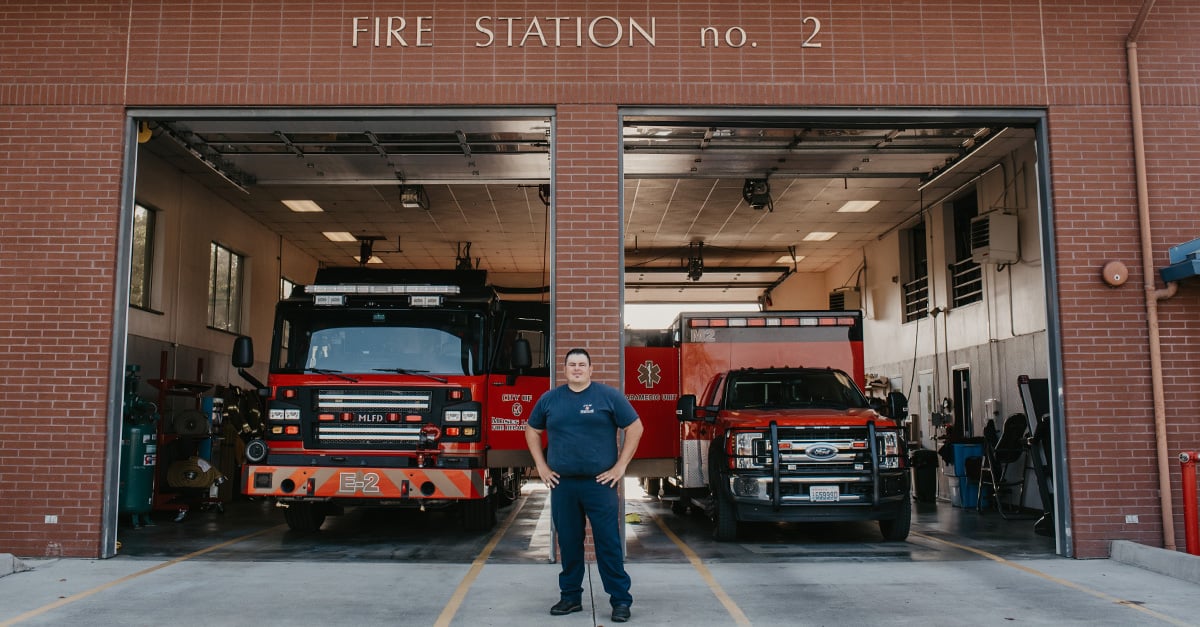
A fire science degree can prepare you for more than a career responding to fires. For experienced fire service professionals, earning a degree provides an opportunity to build on the knowledge gained through hands-on work.
If you are wondering how versatile a fire science degree can be, and how it translates to different careers, check out some of these options.
7 Fire Science Career Paths to Consider
A fire science degree is relevant for a variety of careers within and beyond the traditional firehouse, including the following:
1. Firefighter
Firefighters respond to fires and other emergencies, protect people and property, provide emergency services and participate in fire prevention and public education.
While a college degree may not be generally required to become a firefighter, requirements vary by department and location. Qualifications may include a high school diploma or equivalent, fire academy training, physical fitness testing, certifications and other qualifications.
For professionals already working in the fire service, a fire science degree offers the opportunity to expand knowledge beyond the technical aspects of emergency response and develop skills that may be relevant to leadership, administration and other responsibilities.
2. Fire Inspector
Fire inspectors help identify fire hazards and promote compliance with fire safety regulations and codes. Their responsibilities may include inspecting buildings, evaluating fire protection systems, identifying potential hazards and communicating recommendations to property owners or organizations.
Fire inspection requires an understanding of how fires start and spread, as well as how building design, materials and fire protection systems can affect safety.
Requirements vary, but fire inspectors typically need at least a high school diploma or equivalent and work experience as a firefighter or in a related occupation. Some positions may also require certification.
3. Fire Investigator
Fire investigators examine fires to determine their origin and cause. Their work may involve examining fire scenes, documenting evidence, interviewing witnesses, reviewing records and preparing reports.
Some fire investigators work for fire departments or government agencies, while others may work in areas such as insurance or private investigation. Investigators may also work with law enforcement agencies or be called upon to testify about their findings.
Fire science education can provide an academic foundation in fire behavior, fire investigation and related subjects, while prior firefighting experience can also provide valuable practical knowledge.
/Beyond-Firehouse-1200x600-B.jpg?width=1200&height=627&name=Beyond-Firehouse-1200x600-B.jpg)
4. Fire Prevention Specialist
Fire prevention focuses on reducing the likelihood and impact of fires before they occur. Professionals in this area may develop public education programs, conduct fire safety training, evaluate risks, create prevention materials or work with organizations and communities to improve fire safety practices.
For someone with fire service experience, fire prevention can provide an opportunity to apply firsthand knowledge in a different way. Instead of responding after an emergency occurs, prevention professionals focus on identifying hazards and helping communities reduce risk.
5. Emergency Management Professional
Emergency management professionals help organizations and communities prepare for, respond to and recover from emergencies and disasters.
Their work can include developing emergency plans, assessing risks, coordinating resources, conducting exercises and working with multiple agencies during an emergency.
Fire service professionals may already have experience coordinating people, equipment and resources during high-pressure situations. A fire science degree can complement that experience with knowledge of planning, administration, risk management and emergency response.
Requirements vary, but a bachelor's degree is the typical entry-level education listed by the BLS for emergency management directors.
6. Fire Service Instructor
Fire service professionals may also pursue roles involving education and training. Fire service instructors may teach firefighters, emergency personnel or other professionals about topics such as fire behavior, emergency response, safety procedures, equipment and prevention.
For professionals with significant field experience, teaching can provide a way to share practical knowledge while developing additional skills in communication, curriculum development and leadership.
Specific requirements for instructor positions vary by employer and may include certifications, professional experience and education.
/Beyond-Firehouse-1200x600-C.jpg?width=1200&height=627&name=Beyond-Firehouse-1200x600-C.jpg)
7. Fire Officer or Service Administrator
Fire service careers can extend into leadership and fire administration. Officers and administrators may be responsible for personnel, budgets, policies, training, emergency operations, community outreach and long-term planning.
These responsibilities require more than technical knowledge. A firefighter may know how to respond effectively to an emergency, for example, while a leadership role may also require the ability to analyze department data, manage personnel, develop policies, communicate with community stakeholders and plan for future needs.
Can a Fire Science Degree Build on Fire Service Experience?
Fire service professionals develop practical knowledge through training, emergency response, teamwork and experience. A degree doesn't replace that knowledge. Instead, formal education can provide another way to examine the principles behind the work and develop skills that may be useful in leadership or administrative roles.
For example, coursework may provide opportunities to explore:
- Building construction
- Communication and organizational strategies
- Community risk reduction
- Emergency planning
- Emergency services administration
- Fire behavior and combustion
- Fire prevention and protection
- Leadership and management
- Risk assessment
These subjects can help connect classroom concepts with situations professionals encounter on the job.
Explore Your Fire Science Education Options at Columbia Southern University
If you're considering returning to school, explore fire science degree options and compare program requirements, coursework and flexibility to determine which path may fit your goals.
To learn more about CSU’s online fire science degree options, visit our fire science degree page.
/1769632297617.jpg)

/Education%20vs%20Experience-%201200x800.jpg)