
NOTE: This article was originally written and published by Matt Rowley on July 21, 2022. It was edited and updated by Jazmin Hill in April 2026.
The difference between business professional and business casual comes down to formality.
- Business professional is more formal (think suits, blazers and polished details) and is typically the safest choice for interviews.
- Business casual is more relaxed but still neat and appropriate, often seen in modern or less formal workplaces.
First impressions carry weight, especially in job interviews. What you wear plays a meaningful role in how you are perceived, making it an important part of your interview preparation.
If possible, ask the hiring manager about the workplace dress code before your interview. If you don’t have time or can’t get a clear answer, it’s generally safer to choose business professional attire. A more polished look can signal preparation and respect for the opportunity.
So, what exactly is the difference between business casual and business professional? While both styles are appropriate in workplace settings, they reflect different levels of formality.
In this article, we break down how business professional and business casual differ, and how to choose the right one for your interview.
What Is Business Professional Attire?
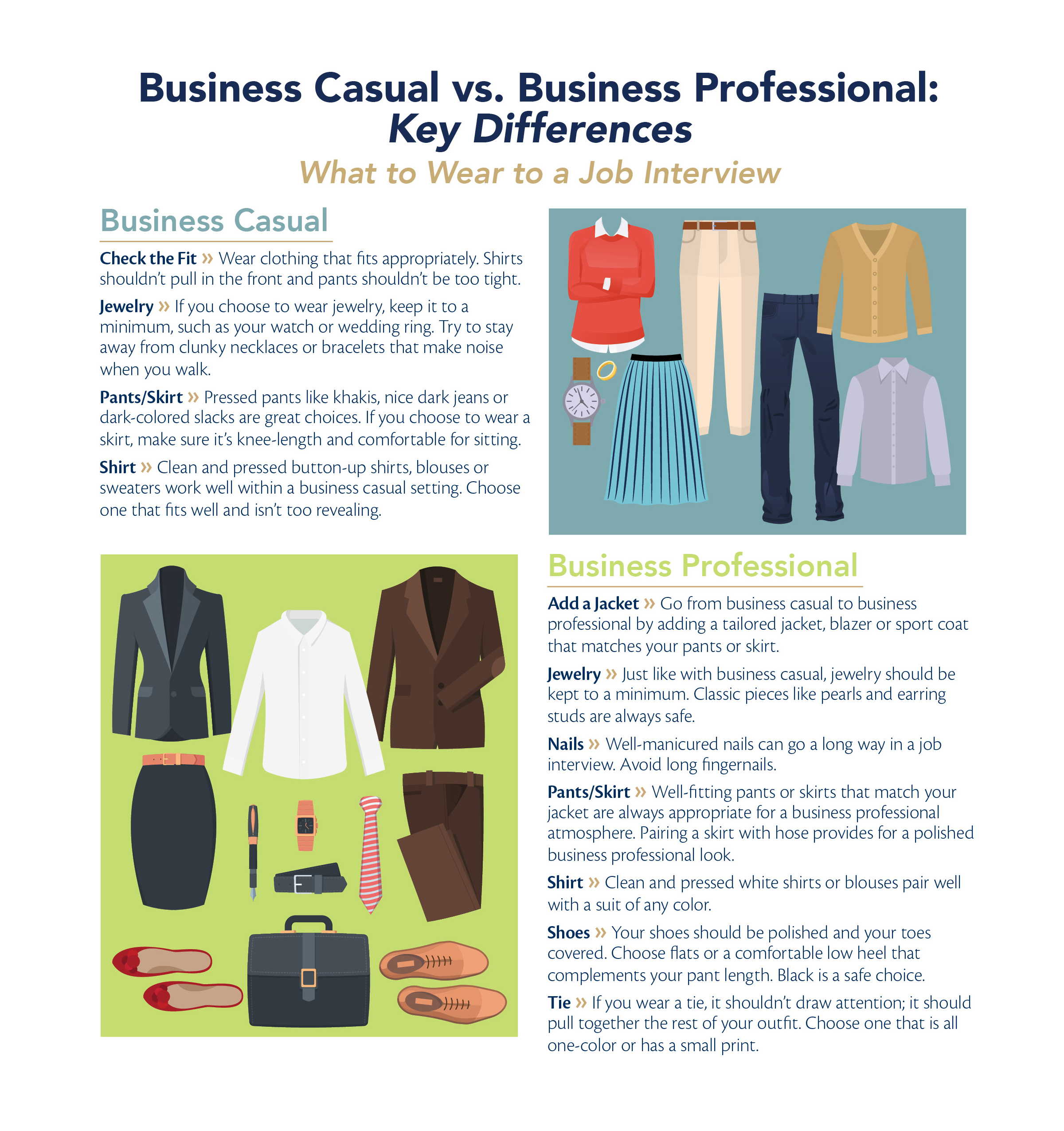
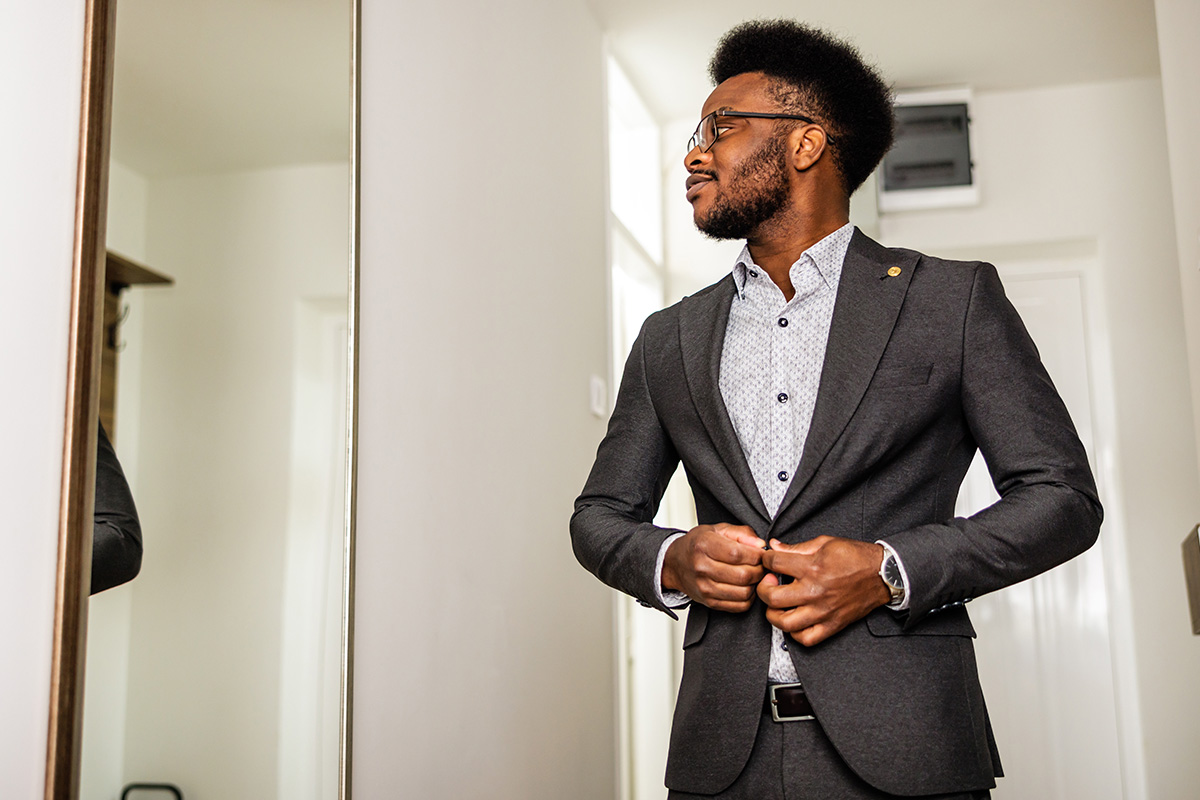
Business professional is more formal and is often expected in interviews, corporate environments or client-facing roles. This style emphasizes structure, coordination and a highly polished look.
Key Guidelines and Examples:
- Structured layers: A suit, blazer or sport coat adds formality. Matching sets are typically preferred.
- Tops: Crisp, pressed dress shirts or blouses in neutral tones pair well with suits.
- Bottoms: Tailored pants or skirts that coordinate with your jacket create a cohesive look. Skirts should be an appropriate length for sitting and standing comfortably.
- Shoes: Closed-toe, polished shoes are recommended. Neutral colors such as black or brown are commonly chosen.
- Accessories and grooming: Jewelry should remain minimal and classic. Grooming details, including neat hair and well-maintained nails, contribute to an overall professional appearance.
- Optional items: Ties or other formal accessories should complement the outfit rather than draw attention.
- Example outfit: A blazer with a dress shirt, matching pants and polished dress shoes.
What Is Business Casual Attire?
Business casual is a step down from formal business attire, offering a more relaxed but still polished appearance. It is common in modern offices, particularly in creative, tech or hybrid work environments.
Key Guidelines and Examples:
- Fit matters: Clothing should be well-fitted, not too tight or too loose. Avoid items that pull, bunch or appear oversized.
- Tops: Button-down shirts, blouses, knit tops or sweaters are appropriate. Avoid overly casual fabrics or revealing styles.
- Bottoms: Slacks, khakis or knee-length skirts are standard. Some workplaces may allow dark, un-distressed jeans, but avoid them for interviews unless you are certain they are acceptable.
- Shoes: Closed-toe flats, loafers or low heels are safe options. Shoes should be clean and in good condition.
- Accessories: Keep jewelry simple and minimal. Avoid pieces that are overly large or distracting.
- Example outfit: A button-down shirt, khakis, closed-toe shoes.

Should You Wear Business Casual or Business Professional to an Interview?
When deciding what to wear, consider the company’s culture and the role you’re pursuing.
- Corporate settings: Business professional is typically expected.
- Startups or creative workplaces: Business casual may be more common.
- If you’re unsure: Business professional is usually the safest choice.
Gain Resources and Tools from Career Services at Columbia Southern University
Understanding the difference between business casual and business professional can help you feel more confident as you prepare for interviews and workplace interactions.
Knowing what to wear to an interview is just one part of preparing for success. Here at Columbia Southern University, our Career Services team prepares students and alumni for job opportunities through one-on-one counseling, resume advice, interview preparation, and even clothing strategies.
For more information about our online certificate and degree programs at the associate, bachelor’s, master’s and doctoral levels, view all programs here.
NOTE: This article was originally written and published by Matt Rowley on July 21, 2022. It was edited and updated by Jazmin Hill in April 2026.
Disclaimer:
Multiple factors, including prior experience, geography, and degree field, affect career outcomes. CSU does not guarantee a job, promotion, salary increase, eligibility for a position, or other career growth.
We recommend that you conduct your own salary research. Salary expectations are dependent on a number of factors like location, experience, credentials, benefits offered, etc. There are a wide variety of sources where you can find potential salary information. We recommend that you review several to get an overall idea of potential salary for a particular field.