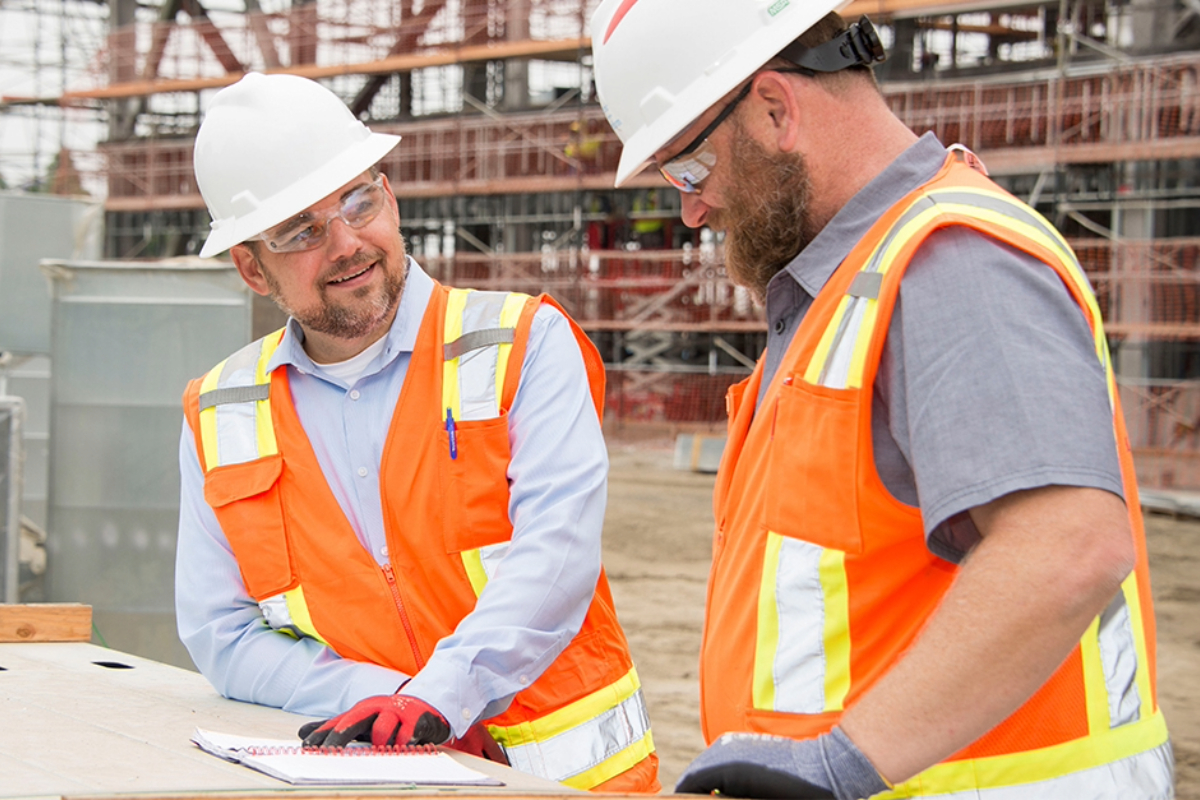
A site safety officer is responsible for identifying hazards, enforcing safety procedures and helping ensure compliance on a worksite. While responsibility for safety on a worksite is often shared between employers, supervisors and workers, a site safety officer is typically responsible for managing health and safety on site and helping ensure compliance with safety standards.
The demand for trained and credentialed safety professionals in the United States is growing. The Bureau of Labor Statistics (BLS) projects that employment will grow by 12% over the next decade. This demand signals a trend in public and private sector organizations, recognizing the organizational and economic benefits of a proactive safety program.
Workplace safety is dynamic and continues to change alongside shifts in labor capacity, new technologies and techniques, and accelerating rates of automation. While safety professionals are more common at larger companies, most worksites are small, and less than 2% have a full-time safety professional. As the BLS projections show, there is no lack of interest in or desire for safety investments.
In this article, we break down some of the key reasons why full-time safety officers are becoming essential across industries.
How Site Safety Officers Help Reduce Costs and Risk
One of the key factors driving this shift is the significant and growing evidence that safety programs can save resources. Lost wages, productivity losses from injuries, the cost of replacing workers, and even the risks of litigation can all add up to a significant sum, one that greatly outnumbers the cost of hiring a dedicated safety professional. Costs of workplace incidents may include:
- Hiring and training replacement workers
- Lost productivity and downtime
- Medical expenses and workers’ compensation
- Regulatory fines or legal costs
An organization’s safety lead uses their expertise to produce estimates and analyze the costs and benefits of structural changes to work schedules, practices and common issues at a particular worksite. Historically, it has been difficult for organizations to track the benefits of safety programs, but more robust data storage and analysis, sophisticated HR systems, and a larger body of data about workplace injuries have made it possible to more accurately project costs and savings.
Adapting to Legislative and Compliance Changes
Greater awareness of the costs of workplace injuries and safety issues has led to the continual creation of federal, state and civic-level safety legislation. Some of these rules are broad enough to cover all workers while others target a specific industry. Understanding the legislation and how it will impact work both across the industry and at the worksite is an essential skill.
Safety professionals help organizations interpret these requirements and apply them in practical ways. This includes understanding regulatory intent, identifying compliance gaps and recommending adjustments that align with both safety standards and operational needs.
Legislation can often include legal or financial penalties for any violations; therefore, having a dedicated professional focused on compliance helps organizations reduce risk while maintaining consistent safety practices across the worksite.
Adopting New Technology and Worksite Practices
Another key element of safety analysis is evaluating the impact of new technology and techniques on workplace safety. New tools, equipment and processes can improve efficiency, but they can also introduce new safety challenges. In an economy increasingly geared toward speed and productivity, being able to understand and address the effects of this approach is invaluable.
Your studies and experience with the past and present of workplace safety can give you a holistic view of how new technologies and approaches affect worker wellbeing. For example, a new technology that promises a 15% increase in speed might sound appealing, but the benefits could be outweighed by increased injury risks or other safety issues. Full-time site safety officers are empowered to analyze these tradeoffs and make data-backed recommendations.
Supporting Recruitment and Retention
A visible commitment to safety can influence how prospective workers view an organization. The role of a site safety officer demonstrates an organization's investment in worker safety. Worksites that prioritize safety often foster stronger trust and communication among employees because the safety professionals help create a sustainable safety culture that incorporates the perspectives of everyone on the worksite.
Safety professionals can be advocates or sounding boards for new ideas and approaches, and they can recognize issues that workers might miss, calling out potentially dangerous behavior. As a safety professional, simply being available to workers can be reassuring and make it more likely that they will stick around long-term, which can cut down on recruitment burdens.
Start or Continue Your Safety Career at Columbia Southern University
Building formal knowledge can support long-term career growth, and Columbia Southern can help you start or continue your journey in the growing workplace safety industry. CSU offers online degree programs in occupational safety and health designed for working professionals. If you’d like to learn more, take a look at our B.S. and M.S. in Occupational Health and Safety
Disclaimer:
Multiple factors, including prior experience, geography, and degree field, affect career outcomes. CSU does not guarantee a job, promotion, salary increase, eligibility for a position, or other career growth. Testimonials may not reflect the experience of all CSU students.
We recommend that you conduct your own salary research. Salary expectations are dependent on a number of factors like location, experience, credentials, benefits offered, etc. There are a wide variety of sources where you can find potential salary information. We recommend that you review several to get an overall idea of potential salary for a particular field.